 MediQ
Can eating peanuts every day help your aging brain?
A small study in the Netherlands found that older adults who ate unsalted peanuts daily for 16 weeks showed better insulin responses in memory-related brain areas. Earlier results from the same team also linked daily peanut intake to improved verbal memory and brain blood flow.
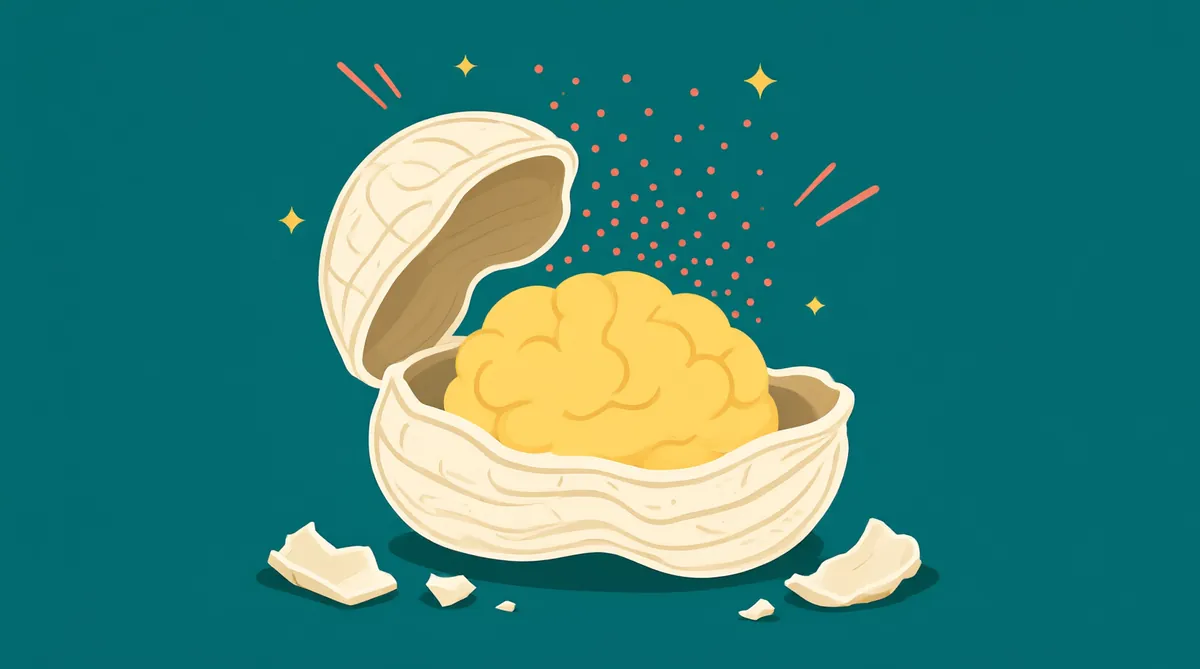
In short
- Eating 60 grams of unsalted peanuts daily for 16 weeks improved insulin responses in memory-related brain areas in 31 healthy older adults.
- An earlier study by the same team linked daily peanut intake to better verbal memory and increased brain blood flow.
- Peanuts contain multiple nutrients, including unsaturated fats, fiber, and L-arginine, that may work together to benefit the brain.
If you enjoy a handful of peanuts as a snack, you might wonder whether they do more than just satisfy hunger. A new study suggests that eating unsalted, skin-roasted peanuts every day may support brain health and memory in older adults.
Researchers at Maastricht University Medical Center in the Netherlands studied 31 healthy adults between the ages of 60 and 75. Participants ate 60 grams of peanuts each day — about two servings — for 16 weeks. The researchers then compared their brain measurements with a period when the same people avoided peanuts entirely.
Why does insulin matter in the brain?
Most people know insulin as the hormone that controls blood sugar. But it also helps nerve cells grow, survive, and communicate with one another. This communication supports memory and other thinking skills.
As people age, the brain can become less responsive to insulin. This change is linked to memory decline and processes associated with Alzheimer's disease.
After 16 weeks of daily peanut consumption, the researchers observed improved insulin responsiveness in several brain regions in the right hemisphere. These areas, including the hippocampus, contribute to memory-related processes.
Our study found that daily peanut consumption beneficially affected insulin responsiveness in memory-related brain regions in older adults.
What else did earlier research show?
These findings build on earlier work by the same team, published in 2025. That investigation found that eating peanuts for 16 weeks increased overall cerebral blood flow by 3.6%. Cerebral blood flow measures how much blood circulates through the brain to deliver oxygen and nutrients. The earlier study also found that verbal memory performance improved by 5.8%.
The researchers believe several components of peanuts work together rather than any single nutrient being responsible. Peanuts contain unsaturated fats, dietary fiber, vitamins, minerals, and plant-based protein. They are especially rich in L-arginine, which the body uses to make nitric oxide, a substance reported to support learning and memory.
Does this apply to everyone?
This was a small study of 31 healthy older adults conducted in the Netherlands. It shows an association between peanut consumption and brain changes, but it does not prove that peanuts prevent memory loss or Alzheimer's disease. The funding came from The Peanut Institute Foundation, though the researchers stated the foundation had no involvement in designing or conducting the study.
For now, adding a moderate amount of unsalted peanuts to your daily diet may be one option to consider for supporting brain health as you age.
What you can do now
- Choose unsalted, skin-roasted peanuts if you want to add them to your daily snacks or meals.
- Eat peanuts in the morning or afternoon, either all at once or divided into smaller amounts throughout the day.
- Avoid peanuts entirely if you have a known peanut or tree nut allergy, and seek emergency care (call 103) if you experience signs of an allergic reaction such as difficulty breathing or swelling.
Questions you may have
How many peanuts did the participants eat?
They ate 60 grams of unsalted, skin-roasted peanuts each day, which is approximately two servings. They could eat them all at once or divide them throughout the day.
Did this study prove peanuts prevent Alzheimer's disease?
No. The study found improved insulin responsiveness in memory-related brain areas, which is linked to processes associated with Alzheimer's disease. However, it does not prove that peanuts prevent the condition.
Why were the peanuts unsalted and skin-roasted?
The researchers specifically tested unsalted, skin-roasted peanuts to ensure a consistent product. The source does not detail why salted or raw peanuts were excluded.
Have a question?
Ask the AI health assistant (in Mongolian).
Read next
How ultra-processed foods may change the way children's brains respond to eating
A small U.S. study found that children who ate more ultra-processed foods showed stronger brain reward responses to food pictures, which was linked to greater body fat increases a year later.

Can eating avocado and mango every day help your blood vessels?
A study found that adults with prediabetes who ate one avocado and a cup of mango daily for eight weeks saw better blood vessel function. The benefits appeared without weight gain, though more research is needed.

Are Sugar Substitutes Linked to Faster Memory Decline?
A study of nearly 13,000 adults in Brazil found that people who consumed the most low- and no-calorie sweeteners had a 62% faster decline in memory and thinking skills over eight years. The link was strongest in adults under 60 and those with diabetes, though the study does not prove cause and effect.