 MediQ
Practical steps to lower household air pollution in your home
Cooking with solid fuels or kerosene creates harmful indoor smoke that damages the lungs and heart. According to the World Health Organization (WHO), switching to cleaner fuels and improving ventilation are effective ways to protect your family's health.
In short
- Around 2.1 billion people globally cook with polluting fuels like wood, coal, dung and kerosene, creating dangerous indoor smoke.
- WHO recommends switching to clean options such as electricity, LPG, natural gas, biogas or solar power.
- WHO explicitly discourages the use of kerosene and advises against using unprocessed coal in homes.
- Improving ventilation and keeping children away from the cooking fire lowers daily exposure to harmful particles.
- Household air pollution causes an estimated 2.9 million premature deaths each year, largely from heart disease, stroke and lung infections.
In Mongolia, many families rely on coal, wood or dung for cooking and heating, especially during the long winter. While this keeps homes warm, it also fills them with dangerous smoke. According to WHO, around 2.1 billion people worldwide cook using open fires or inefficient stoves fuelled by kerosene, biomass (wood, animal dung and crop waste) and coal.
This smoke contains small particles that penetrate deep into the lungs and enter the bloodstream. In poorly ventilated dwellings, indoor smoke can have levels of fine particles 100 times higher than acceptable limits. Household air pollution was responsible for an estimated 2.9 million deaths per year in 2021, including over 309,000 deaths of children under the age of 5. It is also a major contributor to outdoor air pollution.
Choose cleaner fuels when possible
The most important step you can take is to change how you cook and heat your home. WHO defines fuels and technologies that are clean for health at the point of use as solar, electricity, biogas, liquefied petroleum gas (LPG), natural gas, alcohol fuels, as well as biomass stoves that meet the emission targets in the WHO Guidelines.
WHO specifically issues recommendations discouraging the use of kerosene and advising against the use of unprocessed coal. If a full switch is not yet possible, ask local authorities about programmes that provide financial support to purchase cleaner technologies and fuels.
Improve airflow and reduce exposure
Women and children bear the greatest health burden because they typically spend the most time near the domestic hearth doing household chores such as cooking and collecting firewood. To lower their risk:
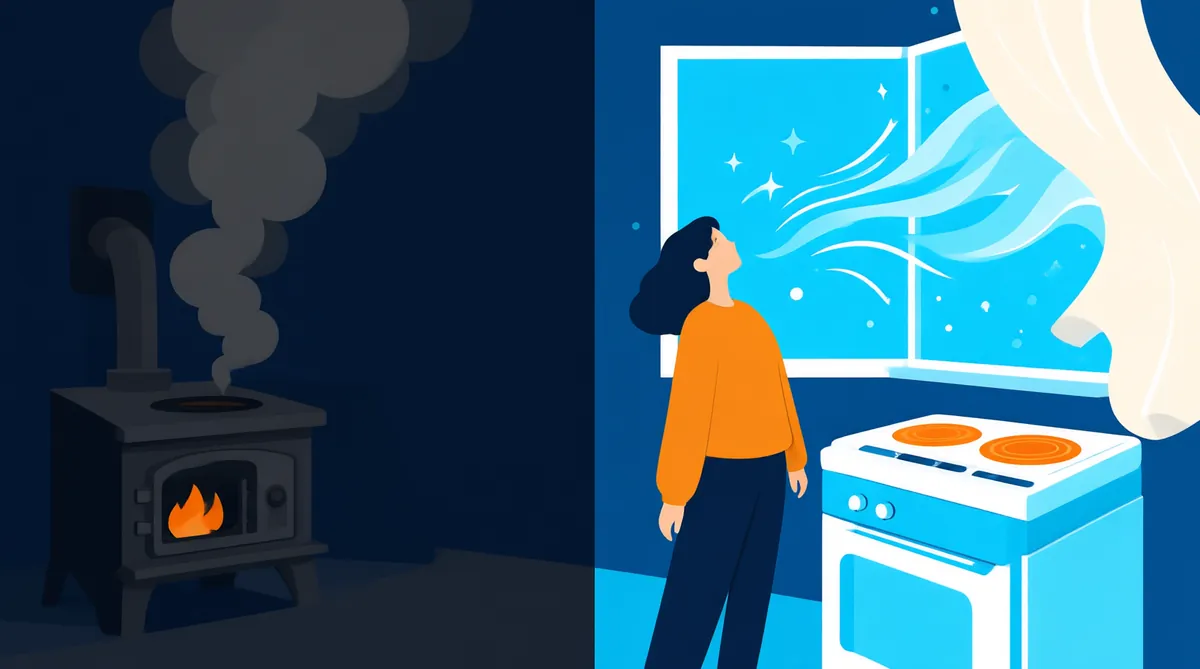
- Keep doors or windows slightly open while cooking or burning fuel to let smoke escape.
- Move children away from the stove or fire while it is in use.
- Avoid spending unnecessary time close to the smoke source.
Strategies to increase the adoption of clean household energy include improved ventilation or housing design, according to WHO.
Watch for warning signs
Household air pollution inflames the airways and lungs, impairs immune response and reduces the oxygen-carrying capacity of the blood. It leads to noncommunicable diseases including stroke, ischaemic heart disease, chronic obstructive pulmonary disease (COPD) and lung cancer. Exposure to household air pollution almost doubles the risk for childhood lower respiratory infection.
If anyone in your home develops persistent coughing, difficulty breathing, chest pain or sudden weakness, seek medical care immediately. Call 103 if symptoms are severe or life-threatening. Do not try to treat serious breathing problems at home. Talk to your doctor about how your home heating and cooking methods might affect your family's health.
What you can do now
- Ask your local government office or energy supplier about available support for switching to cleaner cooking fuels like electricity or LPG.
- Open a window or door slightly while cooking or heating to improve ventilation and let smoke escape, even in cold weather.
- Keep young children out of the room where solid fuels or kerosene are being burned, as they are highly vulnerable to the smoke.
- Avoid using unprocessed coal or kerosene indoors, as WHO specifically advises against these fuels for household use.
- Talk to your doctor if family members have frequent coughs or breathing trouble, and call 103 immediately if someone has severe difficulty breathing or chest pain.
Have a question?
Ask the AI health assistant (in Mongolian).
Read next
A common pesticide is linked to a higher risk of Parkinson's disease
A UCLA study found that long-term exposure to the pesticide chlorpyrifos is linked to more than 2.5 times the risk of Parkinson's disease. Researchers also discovered how the chemical harms brain cells and identified a possible way to protect them in laboratory models.

Climate change health harms are accelerating, global report warns
A 2026 report by the Lancet Countdown finds that heat-related deaths and other climate-linked health risks are growing faster than a decade ago. At the same time, record clean energy investments are already helping protect lives.
Practical steps to lower your health risks from outdoor air pollution
Outdoor air pollution was estimated to cause 4.2 million premature deaths worldwide in 2019, according to the World Health Organization (WHO). While most pollution sources require government action, individuals can take simple daily steps to reduce exposure and protect their heart and lungs.